Rooftops in Denmark: Copenhagen from above
A kingdom between two seas
The smallest of the Scandinavian countries, Denmark proper covers around 43,000 km² between the North Sea and the Baltic Sea: the Jutland peninsula, home to the country's only land border, with Germany, and more than 400 islands, including Zealand, where Copenhagen lies, and Funen. The country has around six million inhabitants. One of the oldest constitutional monarchies in Europe and a member of the European Union since 1973, it has kept its own currency, the Danish krone. The kingdom also includes two autonomous territories, the Faroe Islands and Greenland.
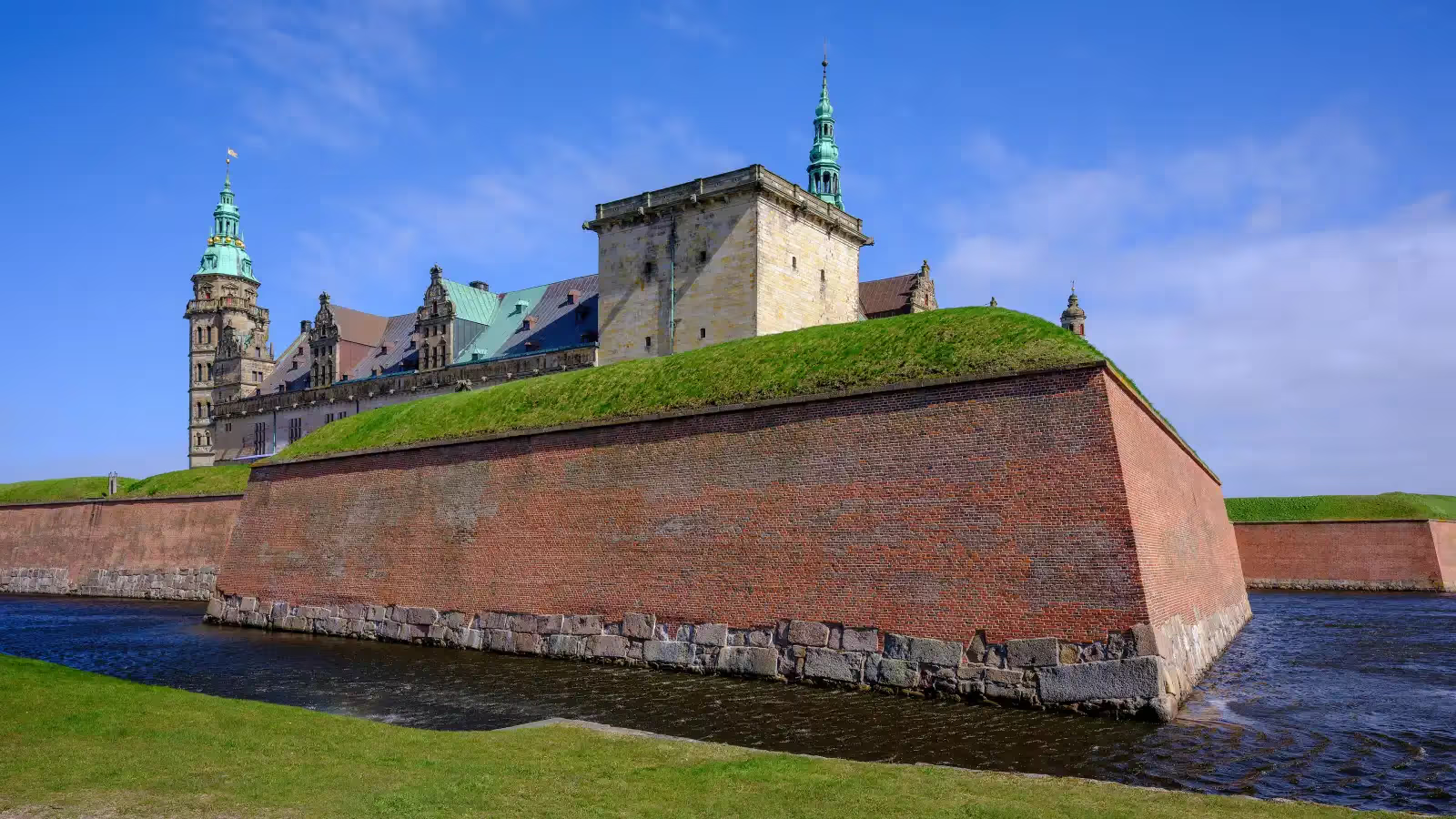
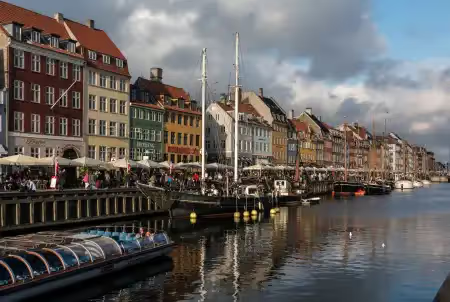
The homeland of Hans Christian Andersen and Lego, Denmark is renowned for its design, its way of life, the famous “hygge”, its Nordic cuisine and its bike-friendly cities. Its castles, such as Kronborg in Helsingør, immortalised by Shakespeare in Hamlet, its beaches, its chalk cliffs and its colourful harbours attract many visitors every year.
Why head up to the rooftops
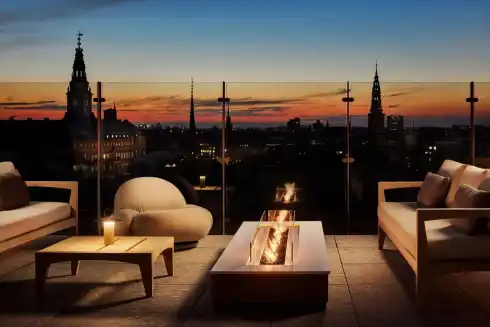
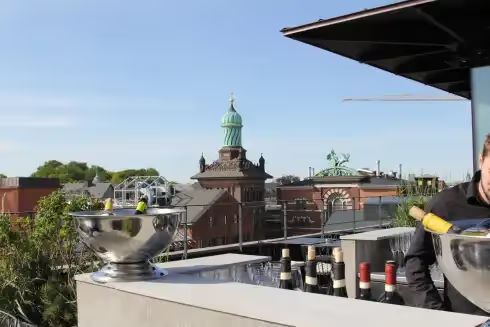
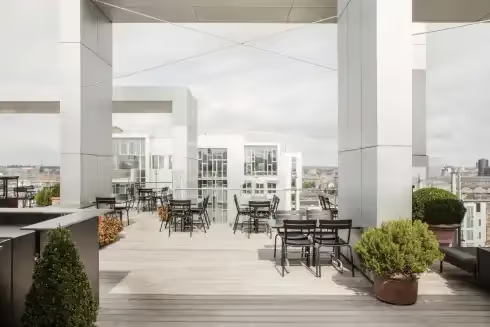
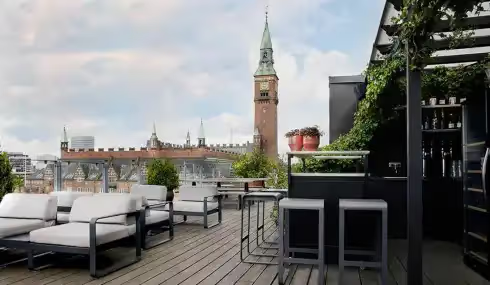
In Denmark, rooftops are concentrated in Copenhagen. The capital is a low-rise city, where church spires and green copper roofs still dominate the skyline: you only need to climb a few floors to take in the spires of the old town, the harbour and its quays. In recent years, rooftop terraces have multiplied there, on hotels, atop a department store, in a former silo and even at the top of a power plant topped with a ski slope.
Copenhagen, the first stop
A capital facing the water
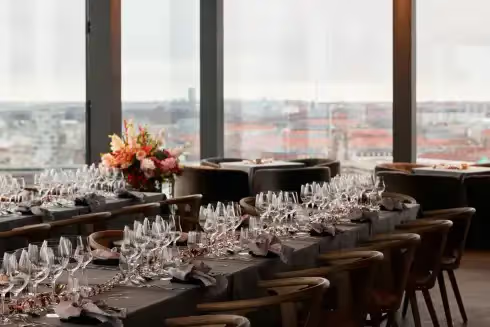
Copenhagen brings together most of the country's rooftops: lounge terraces above the harbour, cocktail bars on hotels in the centre, restaurants on the 12th and 17th floors, a plant-filled conservatory, a restaurant greenhouse on an urban farm and a café 78 metres above the ground, facing the Øresund and Sweden.
Very different atmospheres
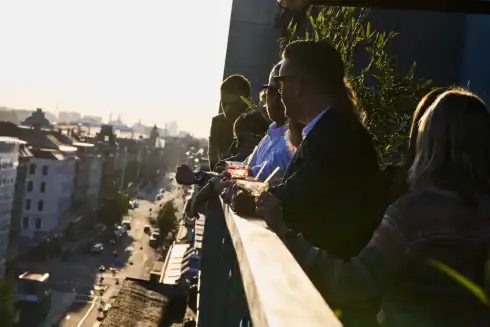
Some venues focus on creative cocktails, others on Nordic, Italian or Japanese cuisine, brunch or seasonal organic food. Prices are high, in keeping with the country, but the welcome is relaxed, and several places operate without reservations.
Practical tips
Season, currency and booking
The climate is cool and often windy: open-air terraces come alive mainly from May to September, making the most of the long evenings of the Scandinavian summer, while the glass-walled rooms stay open all year round. Prices are shown in Danish kroner (DKK), and bank cards are accepted almost everywhere. At sunset, the best tables go fast: book when you can.
Photo: ArildV / Wikimedia Commons, CC BY-SA 4.0