
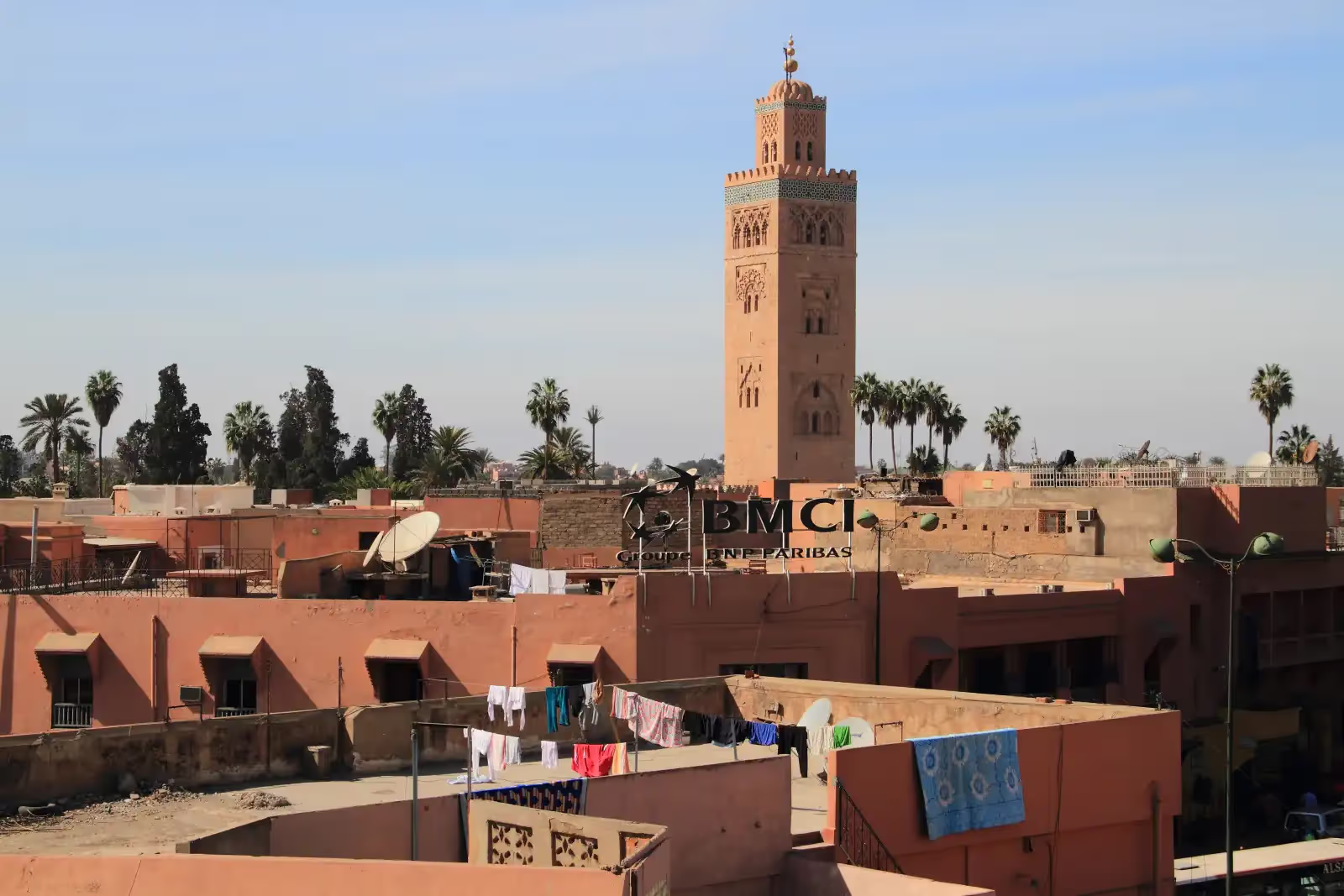
Rooftops in Marrakech: the red city seen from its roofs
An imperial city at the foot of the Atlas
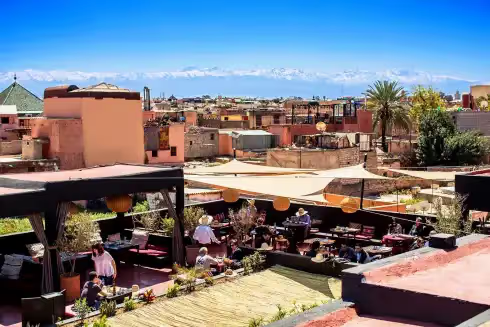
Founded in 1071 by the Almoravid ruler Yusuf ibn Tashfin, Marrakech was the capital of Morocco on several occasions, under the Almoravids, the Almohads and then the Saadians. Nicknamed the “red city” for the ochre colour of its walls, it has nearly one million inhabitants including its metropolitan area and spreads across the Haouz plain, facing the peaks of the High Atlas, which are snow-capped on average from November to May.
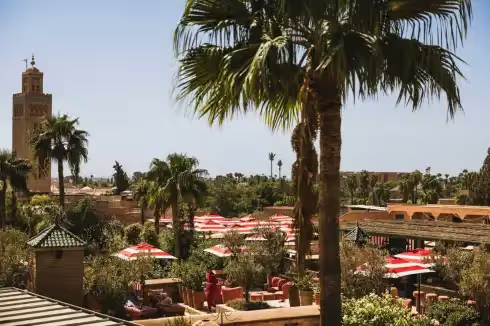
Its historic heart, the medina, covers some 600 hectares within ramparts pierced by numerous gates; it has been a UNESCO World Heritage Site since 1985. To the south-west, Jemaa el-Fna square, with its storytellers, musicians and night-time stalls, was proclaimed a Masterpiece of the Oral and Intangible Heritage of Humanity in 2001. Close by, the minaret of the Koutoubia, 77 metres high and built by the Almohads in the 12th century, serves as a landmark for the whole city. Outside the walls, Guéliz and Hivernage, districts that emerged in the 20th century, are lined with avenues, shops and large hotels.
A city of terraces
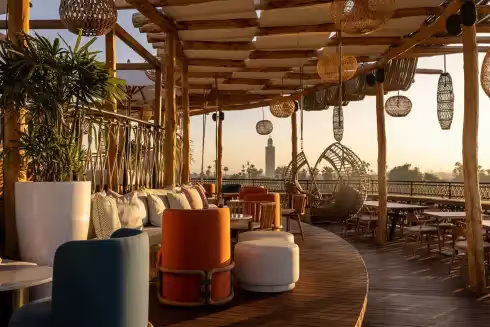
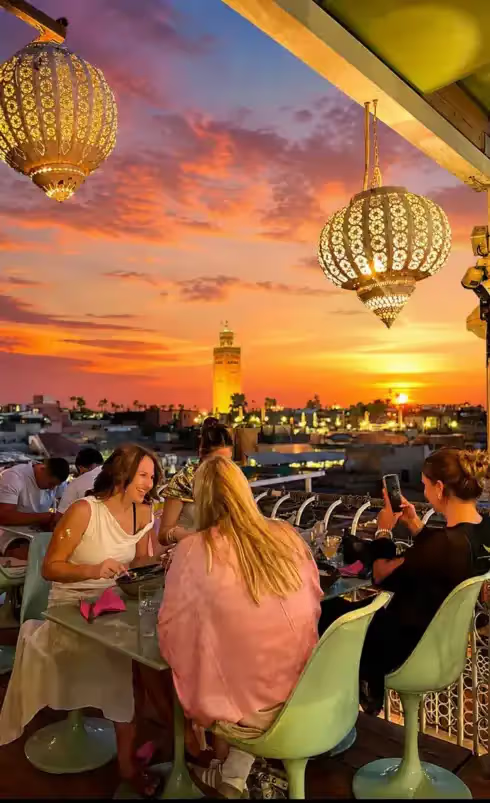
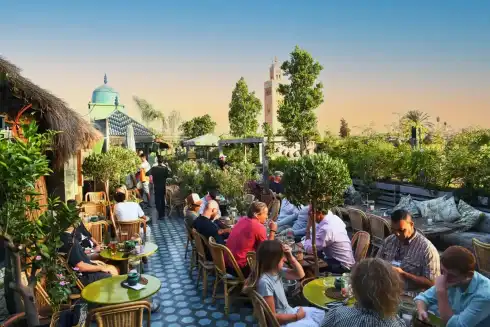
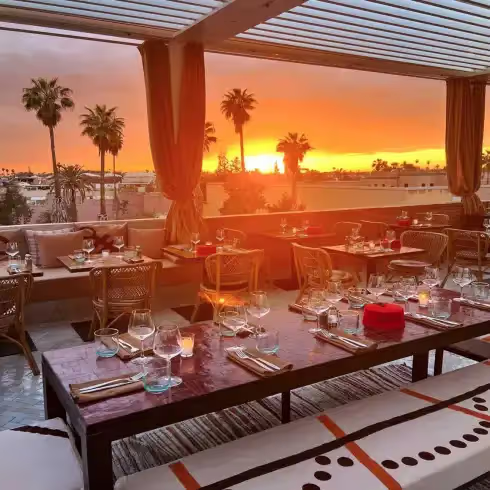
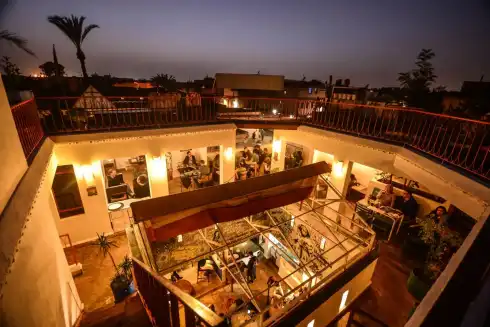
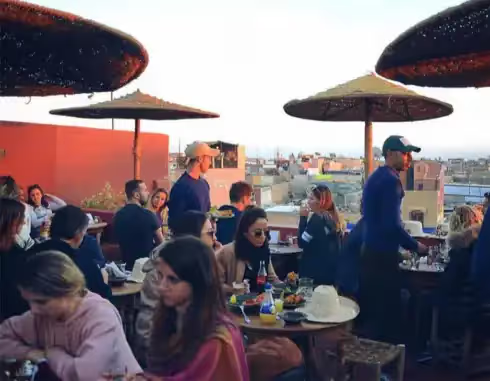
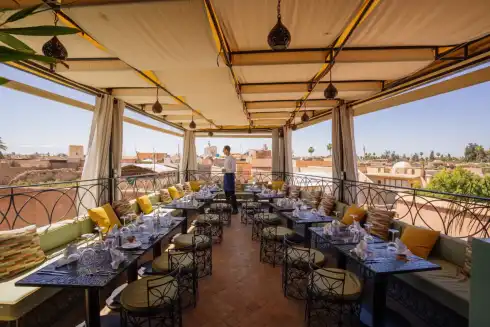
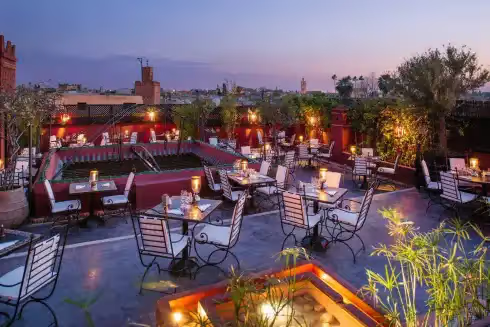
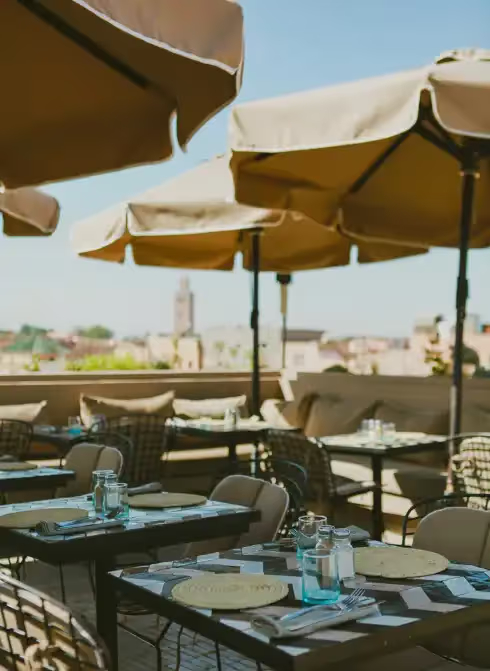
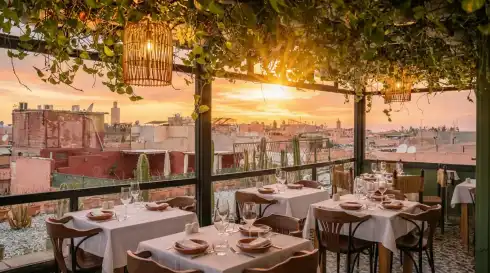
In the medina, the houses are low and topped with flat roofs. Restaurants, cafés and riads have turned these terraces into open-air lounges, from which you can take in the ochre rooftops, the minarets, the storks' nests and, on clear days, the white line of the Atlas. The spectacle is at its height at sunset, when the call to prayer echoes from one minaret to the next.
Where to get a view from above in Marrakech
Facing the Koutoubia
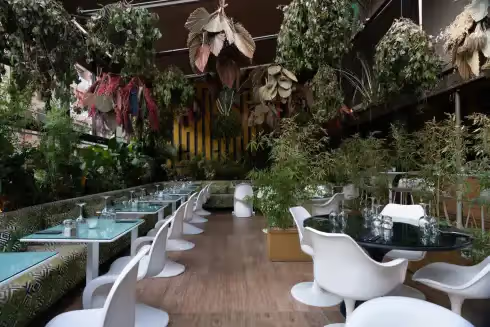
At the entrance to the medina, on rue Fatima Zahra, Kabana has turned a rooftop into a tropical garden looking towards the minaret, with house cocktails, DJs and Mediterranean cuisine until 2am. Very close to Bab Laksour, the vast roof terrace of the El Fenn hotel, open to non-residents without a reservation for a drink, lines up daybeds and a long marble bar facing the Koutoubia. A little further up in Mouassine, MK Rooftop spreads its lounges over several levels at the top of Maison MK, with a 360-degree view over the Koutoubia and the Dar el Bacha palace.
Around Jemaa el-Fna square
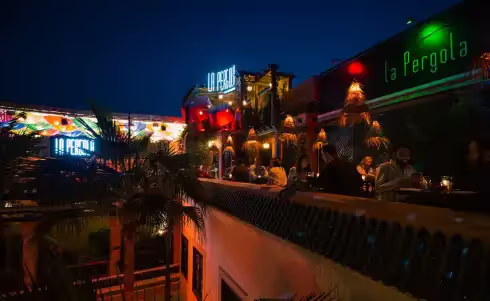
On rue des Banques, a few steps from the square, Le Salama rises over three levels up to a skybar beneath climbing plants, ahead of a Moroccan dinner livened up every evening by a show. On rue Riad Zitoun Lakdim, Dardar combines reinvented Moroccan cuisine, wines and cocktails on a roof looking towards the Koutoubia and the Atlas, while La Pergola, on the terraces of Riad Monceau, hosts live jazz every evening.
In the heart of the souks
On Spice Square, neighbours Nomad and the Café des Épices overlook the bustle of Rahba Kedima from their terraces: modernised Moroccan cuisine at the former, fresh juices and small dishes at gentle prices at the latter, and no alcohol at either. Further north, near Dar el Bacha, the Terrasse des Épices spreads out its alcoves and parasols facing the Atlas, with champagne and seasonal cocktails. On rue Mouassine, Café Arabe combines Moroccan and Italian cuisine on a roof looking towards the Koutoubia, and near the Marrakech Museum, Le Foundouk, set in a former caravanserai, lays out its candlelit terrace every evening.
To the south: the Mellah and the Kasbah
On Place des Ferblantiers, at the entrance to the Mellah, Kosybar looks out on the storks' nests perched on the ramparts of El Badi Palace, with Moroccan cuisine, Japanese dishes, beer and cocktails. In the Kasbah, Café Clock, set in a former school, opens its terraces at sunset and hosts concerts, storytelling or workshops every evening, without alcohol.
In the new town
In Hivernage, the Rooftop Garden crowns the Nobu Hotel: a circular pool open all year round, cabanas, a sushi bar and DJs at sunset, with a 360-degree view as far as the Atlas. In the heart of Guéliz, MY Kechmara has turned its roof into a hanging garden where people share wines, draught beers and cocktails, more for the atmosphere than for the view.
Tips for making the most of Marrakech's rooftops
With or without alcohol
Not all of the city's rooftops serve alcohol. Kabana, El Fenn, MK Rooftop, Dardar, Le Salama, La Pergola, the Terrasse des Épices, Café Arabe, Le Foundouk, Kosybar, the Rooftop Garden and MY Kechmara offer wines and cocktails; Nomad, the Café des Épices and Café Clock focus on freshly squeezed juices, mint tea and alcohol-free drinks. Each listing states which is the case: check before choosing your terrace for an aperitif.
Season, opening hours and access
With sunshine for most of the year, the terraces are lively in every season: misters and parasols in summer, heaters and open fires when the nights turn cool in winter. In the height of summer, some venues only open in the evening, such as Kabana from mid-July to the end of August. Sunset is the most sought-after time slot: book for dinner, or arrive early at places that do not take bookings for drinks, such as El Fenn. Cars cannot drive through the alleys of the medina: you finish on foot from Jemaa el-Fna or a nearby gate, and reach Guéliz and Hivernage by petit taxi. Finally, prices are displayed in dirhams; dress appropriately, as this is required at the most upscale venues.
Photo : Schorle / Wikimedia Commons, CC BY-SA 4.0